Kenya and Switzerland grant first-ever Article 6.2 authorisation for landmark carbon programme covering 226,000 Roam electric motorcycles at COP31
Nairobi - Kenya, 19th November 2026
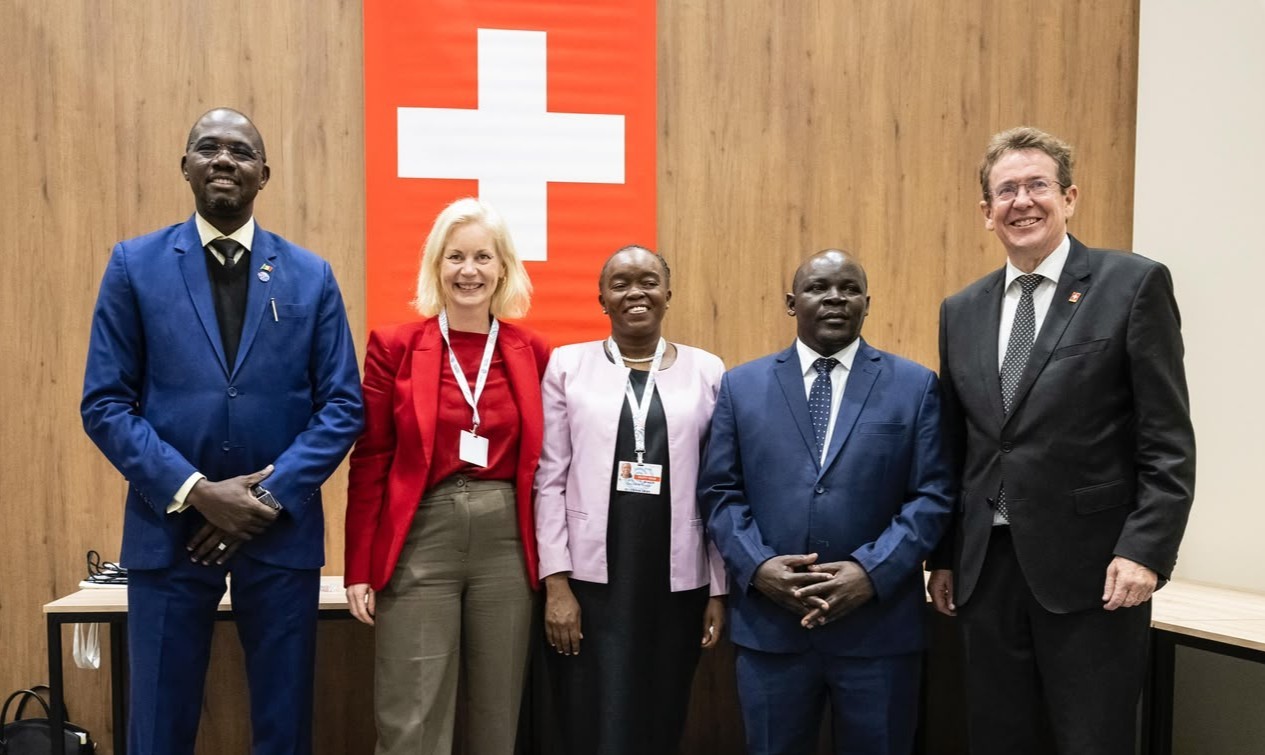
At COP31, Dr. Deborah Mlongo Barasa, Cabinet Secretary of Kenya’s Ministry of Environment, Climate Change and Forestry, and Swiss Federal Councillor Albert Rösti celebrated the authorisation of ROAM’s greenhouse gas mitigation activity ‘E-Mobility Solutions in Kenya’ under Article 6.2 of the Paris Agreement. This first-ever authorisation by the two partner countries under their bilateral climate agreement to the Paris Agreement marks an important milestone for their cooperative climate action and provides a clear framework for future mitigation activities developed under the agreement through 2030.
Kenya and Switzerland have authorised the first Article 6.2 programme under their bilateral climate agreement to the Paris Agreement. Owned and implemented by Roam Electric, supported by First Climate and Article Six Group, the authorised activity enables the local manufacturing and deployment of 226,000 electric motorcycles that displace fossil-fuel boda-bodas, the motorcycles widely used across Kenya as taxis and for goods delivery.
Aliou Gori Diouf, minister of Environment and Ecological Transition of Senegal, Sigrun Gjerlow Aasland, minister of Climate and the Environment of Norway, Deborah Mlongo Barasa, Cabinet Secretary for Environment, Climate Change and Forestry of Kenya, Gilbert Siame, minister of Green Economy and Environment of Zambia, and *Albert Roesti, *Swiss Federal Councillor and minister of Environment, Transport, Energy and Communications, from left
By making electric motorcycles more affordable for riders, the activity aims to accelerate Kenya’s transition to clean mobility, reduce greenhouse gas emissions, and deliver lasting air-quality benefits in urban and peri-urban areas while advancing several UN Sustainable Development Goals (SDGs) in Kenya. Through the purchase of the resulting Internationally Transferred Mitigation Outcomes (ITMOs), the KliK Foundation provides carbon finance that helps unlock the investment needed to scale up the activity and make it financially viable.
This first Kenya-Switzerland authorisation sets an important precedent for future authorisations in Kenya, confirming compliance with the requirements of the bilateral climate agreement and demonstrating the operational implementation. This establishes a clear framework for the transfer of all mitigation outcomes (MOs) generated by activities in Kenya. The KliK Foundation expects the transfer of around 5 million ITMOs from its Kenya portfolio until 2030.
Roam Air boda boda Rider carrying a passenger
“We are delighted to mark this first authorisation between Kenya and Switzerland under our bilateral cooperation pursuant to the Paris Agreement. It is an important milestone in our partnership and demonstrates how international cooperation under Article 6.2 can translate into tangible climate action. The implementation of ‘E-Mobility Solutions in Kenya’ will reduce emissions while delivering wider benefits for our people, our economy and our transition to clean mobility.” - Dr. Deborah Mlongo Barasa, Cabinet Secretary of Kenya’s Ministry of Environment, Climate Change and Forestry .
Why it matters
Transport is Kenya’s largest source of energy-related emissions. A key driver is the rapidly growing fleet of fossil-fuel motorcycles, which lack emission controls and contribute significantly to both climate pollution and dirty urban air. Kenya has identified electric mobility as a national priority, yet adoption remains extremely low because of high upfront costs and limited charging infrastructure.
Carbon finance closes that gap. ITMO revenue lowers the purchase price of electric motorcycles and funds local assembly, charging infrastructure as well as battery recycling. For riders, the switch means a lower purchase price, lower daily costs, predictable energy bills and a more stable income.
For Kenya, it means new jobs in manufacturing, charging, maintenance and fleet technology, and cleaner air, as electric motorcycles produce zero tailpipe emissions. The activity supports the SDGs on clean energy, decent work, sustainable cities and climate action. ‘E-Mobility Solutions in Kenya’ is aligned with the country’s climate and sustainable-transport priorities. It is additional to Kenya’s NDC and meets the applicable eligibility requirements under the Kenyan carbon-market framework as well as the Swiss CO₂ legislation. Full documentation of the activity is available on the website of the Swiss Federal Office for the Environment FOEN (Registered compensation projects abroad).
Roam Air Electric Motorcycle at Roam Park Production Floor
“This is a groundbreaking deal, the first of its kind in East Africa to use carbon finance to put electric motorcycles on the road. It makes it easier for motorcycle riders to go electric, with a lower price, lower daily costs and a more stable income. Our motorcycles are manufactured locally in Kenya and designed for the way riders here work, and every kilometre ridden is measured, so the climate impact is real and verifiable.” - Filip Lövström, CEO & Co-Founder, Roam.
“Achieving the first authorisation of an Article 6.2 activity in Kenya represents an important milestone and sends a strong signal to stakeholders in the carbon markets in Kenya. It establishes Kenya at the forefront of Article 6.2 implementation globally. We are truly grateful for the collaboration of all stakeholders involved. Looking ahead, we hope to see further authorisations in the near future to deliver a positive impact for the communities and individuals involved in the activities." - Yannick Träris-Kahriman, Head of Technology, KliK Foundation.
Stay Informed on the Future of Electric Mobility
Get the latest news, product launches, innovation highlights, and behind the scenes updates from Roam delivered straight to your inbox. Be the first to know how we are shaping sustainable transport across the continent.
Thank you! Your submission has been received!
Oops! Something went wrong while submitting the form.