.jpg)
A conversation with Habib Lukaya, Roam Country Manager – Kenya
What does it really mean to own your battery? Why did Roam make battery ownership central to the Roam Air? And what does ownership mean for a rider beyond the day they finish paying?
Q: What does true ownership mean to a rider?
Habib:
We believe a rider should own the complete asset they are working to build. For a commercial rider, a motorcycle is a source of income. The battery is what powers that income.
So when we designed the Roam Air, we wanted the rider to own the motorcycle, the battery and the charger. At the end of the financing period, the rider should have a complete asset in their hands.
Q: Why is owning the battery so important?
Habib:
Because ownership gives you control. You decide when to charge. You decide where to charge. And you decide how you use your motorcycle.
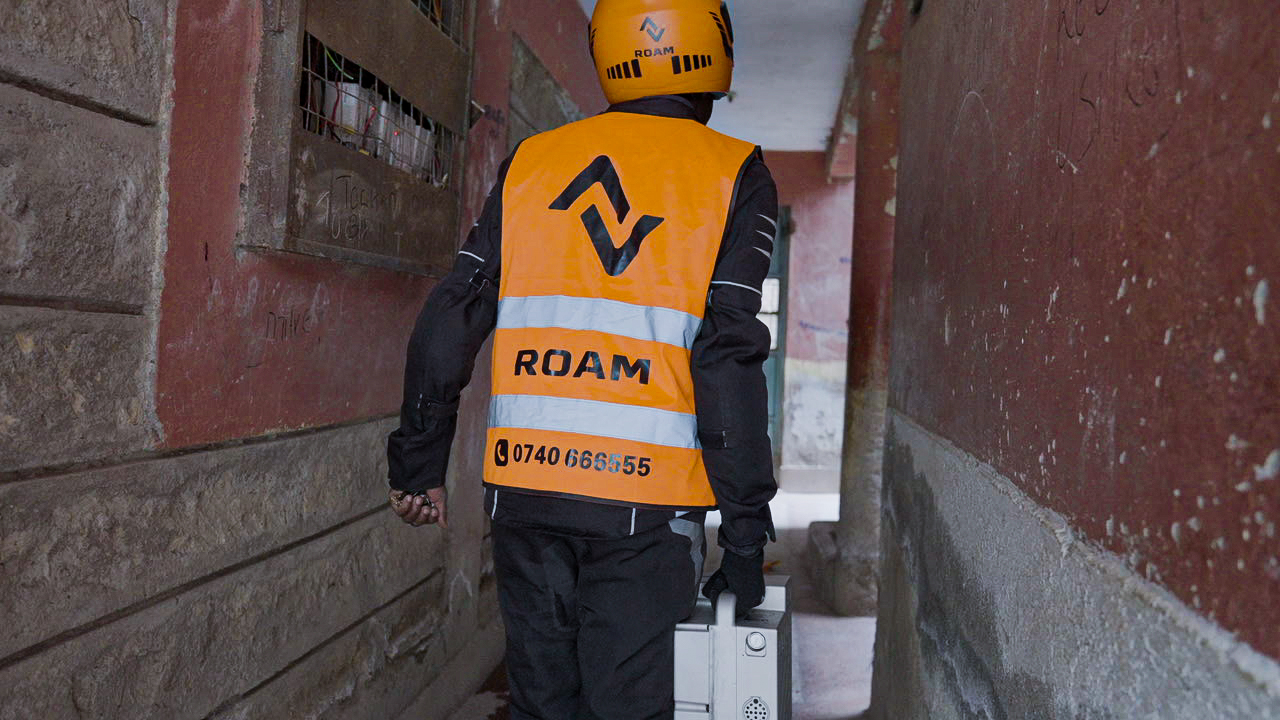
With the Roam Air, you can take your battery home, plug it in and charge overnight. You can charge at work. And when you're on the road, you can use Roam's charging network when you need a faster top-up.
The important thing is that the battery belongs to you.
The battery travels with the rider.
Q: What does that mean for a rider's daily life?
Habib:
It means charging can become part of your routine rather than another task you have to plan your day around. Finish work. Go home. Plug in. Wake up. Your battery is ready. For many riders, that simplicity matters.
We have riders who live in Nairobi and travel regularly to places like Nyeri. They don't think of charging as a separate trip. It is simply something they do as part of their day.
Q: Does ownership also make financial sense?
Habib:
Absolutely. When a rider is financing a motorcycle, we have to think about the entire economics of ownership, not only the purchase price.
How much does it cost to run every day? How much does the rider spend on energy? How much goes into maintenance? And, importantly, what does the rider own when the financing ends?
With battery ownership, the answer is clear.
You own the motorcycle. You own the battery. You own the charger.
That is a much more complete ownership proposition.
Q: Why is this particularly important for Kenyan riders?
Habib:
Because Kenyan riders don't all work the same way. Some spend their entire day in Nairobi. Others travel between counties. Some work in logistics. Others carry passengers or deliver goods. We wanted a model that gives riders the flexibility to use the motorcycle around their lives, not force their lives to fit around the motorcycle. Ownership gives you that flexibility.
.jpg)
Q: What does this mean when the financing is finally finished?
Habib:This is probably the most important question. When you make that final payment, what should you have?
For us, it should be a complete income-generating asset.
Not just a motorcycle. The motorcycle, the battery and the charger. Something you can continue using to earn, without having to keep paying for access to the asset that makes it work.
That is what ownership should mean.
Q: And what does growing financier interest tell you?
Habib:It tells us that the market is becoming more confident in electric mobility.
Financial institutions want to understand the asset they're financing. They want evidence that it can work commercially, that it can generate income and that it will remain useful over time.
As more riders use electric motorcycles every day and more businesses adopt them, that picture becomes clearer. For me, the growing interest from financiers is a sign that electric mobility is becoming a serious part of Kenya's transport economy.
Q: So, in one sentence, what does battery ownership mean to you?
Habib: It means owning the thing that powers your livelihood.
That's why we chose battery ownership.